
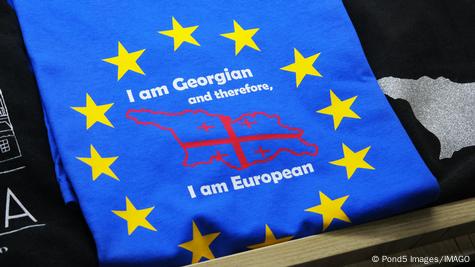
By Gvantsa Machitidze
BA International Relations Student at Anglo-American University, Prague
July 2025 • 4-Minute Read
“I am a Georgian, therefore I am European” as the Georgian Prime Minister Zurab Zhvania stated in this popular quote in the Council of Europe in 1999[1], we still see the struggle of seeing Georgia part of the europe. Despite the long and complex Georgian path to the EU, we are facing biased ideas about where Georgia stands in recent worldwide situations.
When talking about the Georgia-EU relationship we need to consider the beginning of cooperation between Georgia and the EU. The year Georgia became independent, 1991, is also a first step of a milestone of Georgian path to EU. While many people will argue that Georgia’s European path started in 2014 with the association agreement with the EU, we can encounter Georgia’s cooperation and proximity to the EU. This was the first bureaucratic step towards the European Union. Massive change for Georgia occurred in 2017, which is one of the best benefits Georgia has from the EU- visa liberalization. As in most of the post-communist countries, EU integration was occurring slowly in Georgia, too. With European Neighborhood Policy (ENP), reforms, and standards, Georgia was developing its path to EU membership. Recently, in November 2023, Georgia was granted EU candidate status. Alongside this opportunity, the EU recommended “9 steps towards EU,” containing a list of actions needing to be taken by Georgia to grant the membership of the EU.
The list of the actions itself will give an idea of what Georgia’s challenges are due to its direct recommendations. For example, the fact that the EU gives recommendations regarding free and fair elections in Georgia highlights the lack of elections with the core values of the EU. Another considered most recent challenge in Georgia is a controversial “foreign agent” law which has passed in Georgia’s parliament in 2024. This controversy sparked mass protests from Georgians and raised questions worldwide. The path and the development of Georgia depend on the government’s actions today. There are a variety of scenarios that can occur in Georgia, but predicting the outcomes of these events is enormously impenetrable.
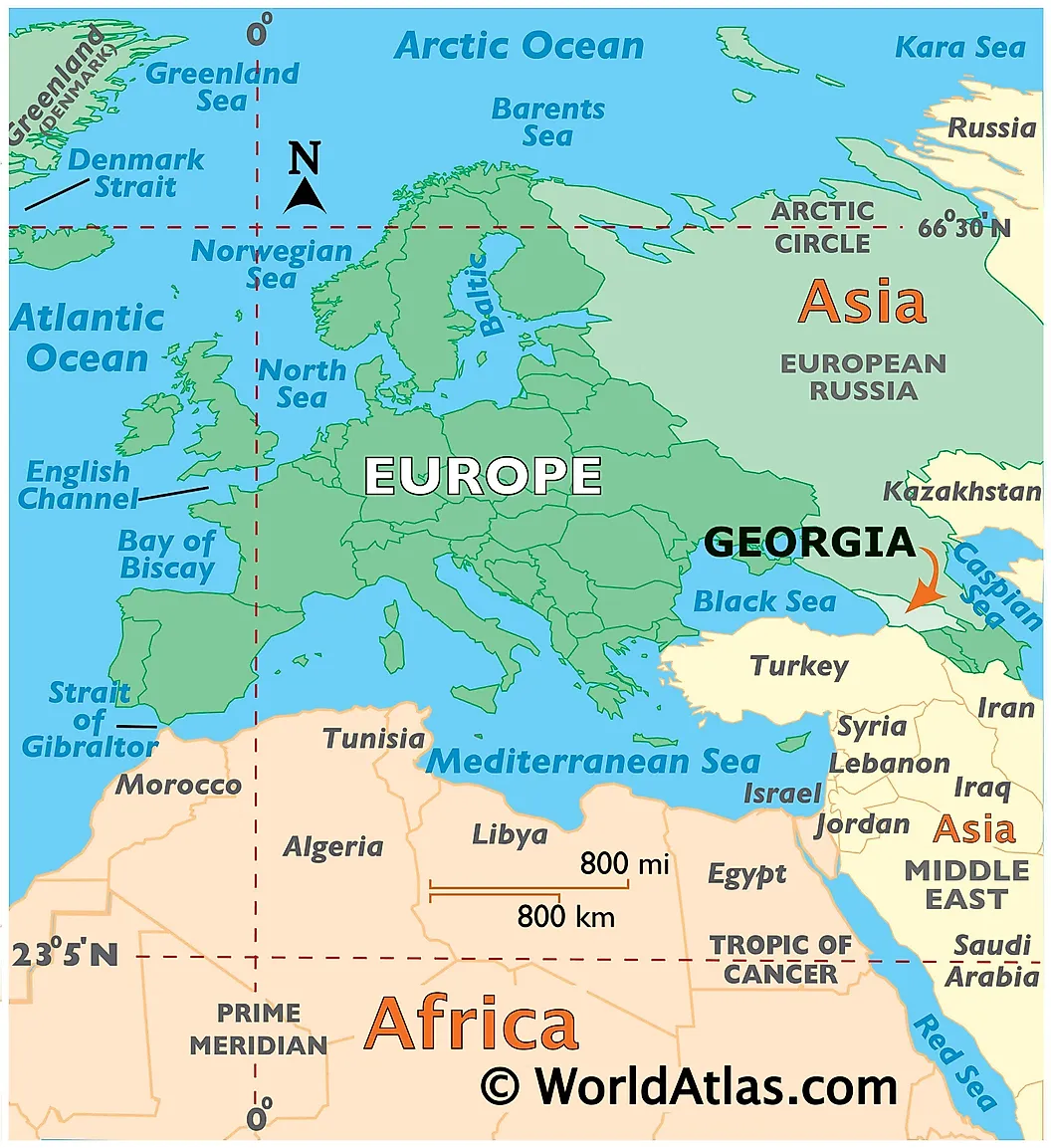
Steps that had been taken and the history that has occurred goes hand in hand with the economic, social, or political connection between Georgia and the EU. One of the biggest concerns is geographical when discussing Georgia’s path in the EU. In picture 1 Georgia is part of Asia, which occurs to be the common understanding of the geography of Georgia; albeit the most accurate statement would be that Georgia is in Eurasia.
Another important aspect we need to consider is the attitude of the population. Regardless of the declaration of the government that their goal is the EU, their recent actions are highly criticized by EU countries. In this case we need to raise a question regarding the population’s stance. Statistics show that 89% of Georgians think EU relations strengthening is crucial[2]. Georgian people’s perception of “European” thinking and values vividly presents itself in recent decades. In fact, values related to “Europeanization” among people are stronger than ever, depending on the education and knowledge among them, which did not happen earlier. Year by year, evidently Georgians present the degree of scarcity connected to European identity and values. It’s worth mentioning that EU relations are crucial for Georgia’s economy, social, and political realms[3]. Since as a post-soviet country integration happened rather harshly than in other countries, Georgia’s successful and bright path is in the EU.
Bibliography
[1] Mestvirishvili, N., & Mestvirishvili, M. (2014). ‘I am Georgian and therefore I am European’: Researching the Europeanness of Georgia. Central European Journal of International and Security Studies, 8(1), 78–90.
[2] Cappucci, M. (2013). Making a European country in the Caucasus: The Georgian experience. Revista Română de Geografie Politică, 15(2), 113–128.
[3] Tsintskiladze, I. (2019). European Integration and Identity Issues in Georgia. Eastern Europe Regional Studies, 1.


 The Eastern European Review
Leave a comment