
By Salome Svanidze
Erasmus Mundus Scholar in the Master’s programme in Human Rights Policy and Practice
July 2025 • 7-Minute Read
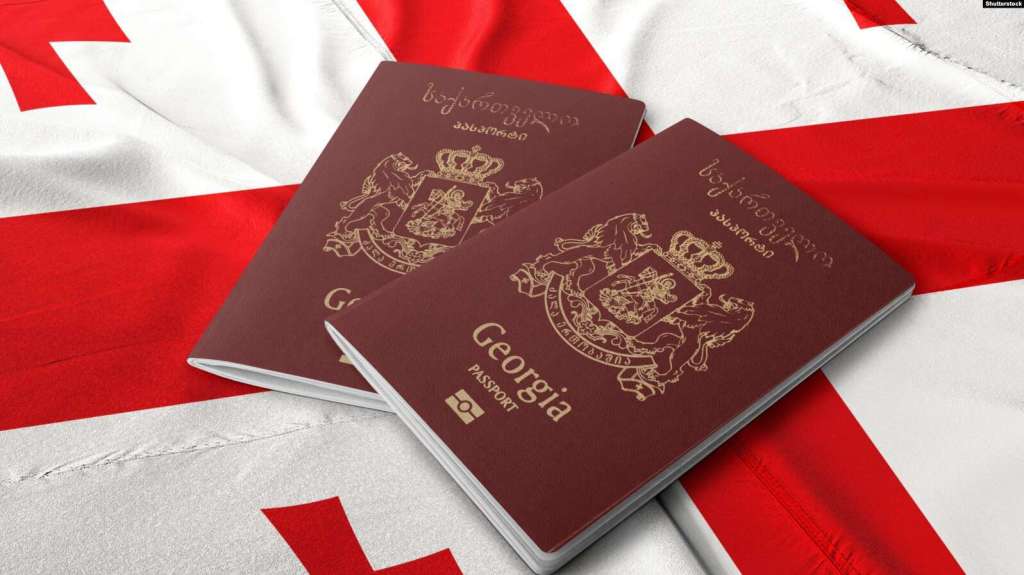
In 2017, the visa-free regime for Georgian citizens to travel to the Schengen Area officially came into effect (European External Action Service, 2017). This milestone in EU-Georgia relations was the result of several important developments, most notably the signing of the Deep and Comprehensive Free Trade Area (DCFTA) agreement in 2014, which fully came into effect in 2016.
Obtaining a visa-free regime carried significant political weight, legitimising the country’s pro-European orientation and paving the way for further integration, which culminated in December 2023, when Georgia was granted EU candidate status. However, the long-awaited Georgian dream of EU membership is now being sabotaged by the ruling party, ironically also named Georgian Dream.
Georgia – once considered one of the most promising aspiring members (Politico, 2024) – is undergoing an authoritarian drift, marked by legislative setbacks, the targeting of civil society and free media, the imprisonment of opposition leaders, and the detention of over 60 individuals, mainly protestors, widely recognized as political prisoners. (Amnesty International, 2024; V-Dem Institute, 2025). As a result, the threat of the suspension of the visa-free regime is now more real than ever.
In response to the recent anti-democratic developments, the EU has announced the possibility of reintroducing its visa regime with Georgia. Notably, the European Commission has sent a letter to the executive in Tbilisi, warning that visa liberalisation will be suspended if certain criteria are not met by 31 August 2025 (Cantone, 2025). Those criteria include repealing legislation that restricts civil society and the rights of sexual minorities, aligning with the EU’s visa policy, and strengthening anti-corruption measures (Civil.ge, 2025). In this context, the High Representative for Foreign Affairs and Security Policy and Vice-President of the European Commission, Kaja Kallas, stated:
“So far, we have got this position that we don’t want to hurt Georgian people. And taking away the visa-free regime, it’s really having an impact on them, but at the same time it’s also an issue of credibility of the EU,” (Cantone, 2025).
Therefore, the countdown has begun: the country faces a tight deadline, yet the government demonstrates little to no genuine commitment to meet the set conditions. As expected from an autocratic regime, the government seized the momentum instead of trying to fulfil the criteria, intensifying state propaganda to downplay the significance of the visa-free regime and shift the main narrative. Georgian Dream Prime Minister Irakli Kobakhidze mentioned that visa-free travel with the EU is not “existential” and that Georgia would prioritize “peace and stability” (Civil.ge, 2025).
This narrative was also echoed by other government representatives, framing the issue as a clash between national sovereignty and dignity versus the pursuit of visas, adding yet another layer to the familiar, well-tested anti-Western rhetoric straight from the Russian propaganda playbook.
What is truly at stake for Georgia?
Moving beyond government propaganda and acknowledging undeniable facts, visa liberalisation has stood not only as a concrete achievement of Georgia’s European integration but also as a profound psychological and symbolic affirmation of the country’s steadfast Western orientation. In everyday terms, it has meant the freedom to travel, access to quality healthcare, opportunities for education and seasonal work, and relief from the burdensome bureaucracy
of visa applications. Simply put, it represents dignity and a sense of belonging within the European family. Nevertheless, some argue that this achievement has been taken for granted. To some extent, that claim holds water. However, it is important to remember that Georgia has long been considered one of the most promising aspiring member countries for good reason.
Expressions of unwavering support for the EU are not mere rhetoric; this has consistently been reflected in public opinion polls. When asked about the EU, 85% of Georgians expressed either full or partial support for the country’s accession. Among those in favour, 60% said they would support EU membership even if it meant severing trade relations with Russia (IRI Georgia, 2022).
It is the same Georgian people – those who have sustained more than 240 consecutive days of protest as of July 25th, 2025. The protests began in response to rigged parliamentary elections in the country, followed by the government’s decision to suspend accession talks with the EU
(Mackintosh, Davies, & Demytrie, 2024). Despite the numerous repressive measures enacted by the government, the protests continue, with participants facing a high risk of being penalised.
For this reason, the suspension of the visa-free regime will have significant legal, political, and geopolitical consequences for the country. Therefore, in any political decision of such gravity, a proportionality test must be applied: what purpose would revoking visa liberalisation serve, and who would it truly affect?
On the one hand, suspending the visa-free regime would send a clear message that governments undermining democratic values/systems while claiming to support European values will face real consequences. It would signal that anti-Western propaganda comes at a cost. Yet the question remains: while the message may be strong, will it be lost in translation if the first to suffer are the very people it’s meant to support? On the other hand, it would represent a profound psychological blow to the very segment of the population that has been tirelessly resisting authoritarianism. Moreover, it would risk isolation of Georgia from the West, especially isolation of the most engaged, liberal, and
pro-European citizens. It would deprive them not only of mobility but meaningful connections with the wider democratic world. What history also shows, this kind of isolation has never been an effective response to crises, a successful strategy in combating authoritarian regimes.
More importantly, this political act would indefinitely stall Georgia’s long-standing pursuit of EU membership. While governments may change, the country’s aspiration to join the European Union remains unwavering. This may seem paradoxical, but it is not. Polling data, persistent public protests, and decades of pro-EU policy demonstrate the depth of this commitment. Although current populist rhetoric and state-driven anti-Western propaganda
attempt to shift the narrative, they do not alter the country’s long-term vision.
The visa-free regime is one of the key symbols and safeguards of Georgia’s European aspiration. Revoking it would not only jeopardise the path to EU membership but could halt it altogether. It has been one of the fundamental pillars of EU–Georgia relations, and dismantling it would call into question everything that has been built through that partnership.
Expect the Unexpected: Final Remarks
Since its independence, Georgia has witnessed the transformative power of international education, open exchange, and the emergence of a liberal, pro-European youth, often referred to as the “Erasmus Generation.” These individuals have brought back not just degrees, but democratic values, innovation, civic courage and strength to know what it means to live in
freedom and acknowledge the responsibility it comes with. Regardless of the EU’s final decision, both options carry legitimate arguments. The real issue
lies in the consequences that will follow.
Despite the current government’s stance, EU membership remains a goal that goes beyond any single administration. Georgia’s European aspiration is a national project. Revoking the visa-free regime could trigger a domino effect – threatening not only freedom of movement, but also the country’s EU candidacy and, ultimately, the hope of full membership.
Therefore, this isn’t just about visas. It’s about the future of Georgia’s democratic identity and the message the EU chooses to send to not just the government, but to the Georgian people. And those who will hear it the loudest, and feel it the hardest, are the very citizens fighting to keep Georgia on a democratic path.
Bibliography
Amnesty International. (2024, May 2). Georgia: Authorities must stop using unlawful force against peaceful protesters and ensure accountability (Report No. EUR 56/8015/2024). https://www.amnesty.org/en/documents/eur56/8015/2024/en/
Cantone, S. (2025, July 16). Georgia’s visa free regime with EU at risk over ‘backsliding’
concerns. Euronews. https://www.euronews.com/my-europe/2025/07/16/georgias-visa-free-re
gime-with-eu-at-risk-over-backsliding-concerns
Civil Georgia. (2025, July 10). EU raises concerns over Georgia’s visa-free regime, sends letter with recommendations. https://civil.ge/archives/692834
Civil.ge. (2025, July 17). Kobakhidze says visa-free travel “not existential” as Brussels warns of suspension. Civil.ge. https://civil.ge/archives/692983
European External Action Service. (2017, March 29). Visa free travel comes into effect for Georgia. European Union. https://www.eeas.europa.eu/node/23697_en
Gavin, G. (2024, September 19). EU could strip Georgians of visa free access over backsliding on democracy. PoliticoEurope. https://www.politico.eu/article/eu-georgia-visa-free-access-schengen-zone-democratic-backsliding/International Republican Institute. (2022, November 7). IRI Georgia poll finds strong support for EU membership, disapproval of Russian presence, distrust in political parties. https://www.iri.org/news/iri-georgia-poll-finds-strong-support-for-eu-membership-disapproval-of-russian-presence-distrust-in-political-parties/
Mackintosh, T., Davies, M., & Demytrie, R. (2024, November 30). Police use water cannon as Georgia EU protests erupt for second night. BBC
News. https://www.bbc.com/news/articles/c62jp68p315o
V-Dem Institute. (2025). Democracy winning and losing at the ballot: V-Dem Democracy Report 2025. University of Gothenburg.

 The Eastern European Review
Leave a comment