
By Mariam Korakhashvili
Bachelor’s Student in International Relations at Webster University Tbilisi
September 2025 • 8-Minute Read
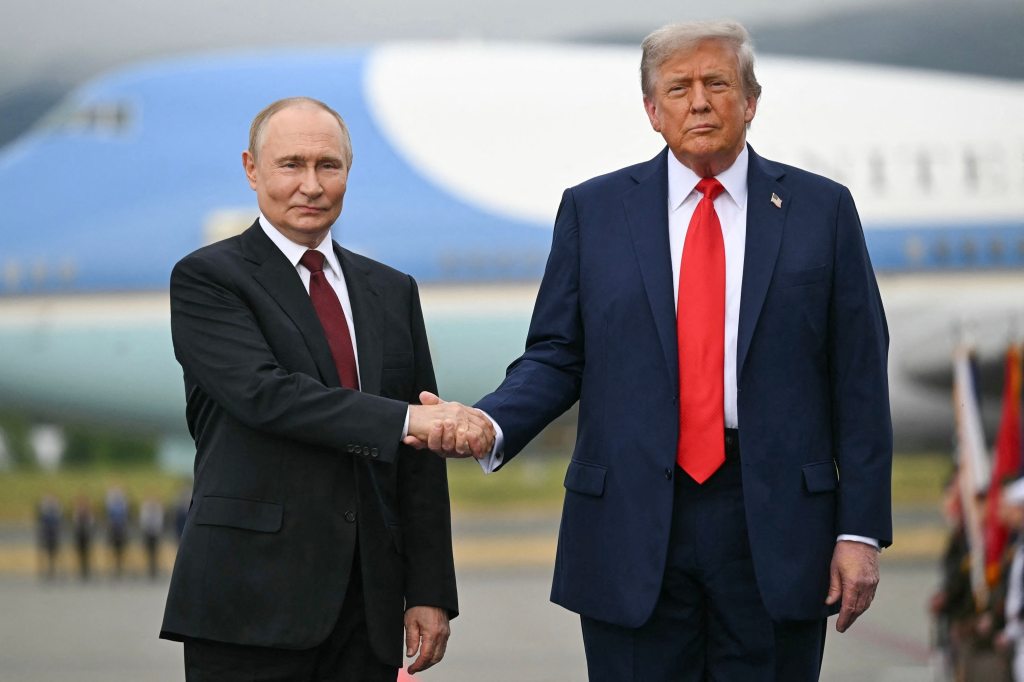
As of late, the whole world kept an eye on the diplomatic turmoil in Washington, DC. President Donald J. Trump held meetings one after another regarding the Russo-Ukrainian war, but the historical Alaska Peace Summit sparked the largest controversy. The summit, which brought together Trump and Russian President Vladimir Putin, represented a high-stake negotiation that could redefine the balance of power and the future of Eastern Europe.
The aim of this article is to explore the most significant points raised during the summit, and examine Russia’s negotiation behavior with the United States since the end of the Cold War. Has Moscow historically honored its commitments in U.S.–Russia agreements? Or have past deals shown a pattern of strategic delay, selective compliance, or outright violation? What should we expect from Russia now?
Even though the summit failed to reach its objective of signing a peace-making agreement, despite high expectations and visible efforts, the conducted dialogue broached several attention-worthy issues which are useful for projecting the future of the ongoing war in Ukraine. The Russian side insisted on maintaining control over occupied territories and called on mass demilitarization of the Ukrainian government, while the United States demanded guarantees that Ukraine’s sovereignty and territorial integrity will be maintained and respected. (Council on Foreign Relations, 2025). The summit was originally envisioned as a trilateral meeting that would include Ukraine’s President Volodymyr Zelenskyy, but Donald Trump ultimately rejected this format, leaving Ukraine absent from the negotiating table (The Guardian, 2025).
The most urgent topic of discussion was the question of a ceasefire and security guarantees for Ukraine. Vladimir Putin emphasized that the talks were not only concerned with an immediate cessation of hostilities but also with determining Ukraine’s long-term security trajectory. Unsurprisingly, the question of NATO membership for Ukraine remained a sensitive topic, carefully avoided by both sides. (Brookings, 2025). This sort of dynamic on display evokes parallels, such as 1990s post–Cold War negotiations over NATO expansion. Then, Russia warned that the eastward enlargement of the Alliance would threaten its security, while the West insisted it was a sovereign choice for newly independent states seeking protection. That cycle of mistrust created the conditions for today’s confrontation. Much like those earlier debates, the Alaska negotiations revealed that each side is still trapped in a strategic loop: the United States views security through the lens of defending sovereignty and deterring aggression, whereas Russia sees security as limiting Western influence near its borders. (Australian Institute of International Affairs, 2025).
Another issue for negotiation entailed talks regarding the renewal of the nuclear arms control debate, as the START treaty, signed in 2010, is close to its expiration. The process that took place prior to signing the previous treaty is one of the most insightful historical precedents for understanding Russia’s negotiation behavior. Although both sides saw a decrease in the number of nuclear weapons deployed as a result of this pact, it also revealed a pattern of Russian-style bargaining. The Russian side often delayed its commitments, argued with the methods used for verification, and kept threatening to withdraw from participation when confronted. Most recently, in 2023, Russia followed through its threats to withdraw due to cited “U.S hostility” over the war in Ukraine. (CSIS, 2023). This serves as an illustration that even in areas of shared interest like nuclear stability, Moscow has historically used agreements as leverage rather than as binding commitments.
The projection for the outcomes of the Alaska Summit calls for a historical lens and perspective. Since the end of the Cold War, despite the newly hatched trust, Moscow has abused the opportunity for negotiations as the means of a strategic instrument to secure and execute its own interests. The Budapest Memorandum of 1994 serves as one of the most evident demonstrations of this point of view. While this agreement guaranteed Ukraine’s security in exchange for giving up the nuclear arsenal, Russia still proceeded to violate the rules by the annexation of Crimea in 2014. (Harvard Kennedy School, 2020).
As expected, the history repeated itself through the Minsk Agreement in 2014. These components of the agreement were designed to ease hostilities in Eastern Ukraine, (Carnegie Endowment for International Peace, 2025) yet violations were reported almost immediately, with fighting continuing in the Donbas region for the following several years. Russia often framed its involvement as limited or indirect, using diplomatic language to distance itself from violations while defending its position. (European Council on Foreign Relations, 2024).
What should we make of the Alaska Summit? While we observed a symbolically important historical precedent, it is highly unlikely that it will eventually produce lasting peace in the Eastern European region. Judging from the repeated patterns of agreement violations, the Western allies of Ukraine possess no guarantees that Russia will be adhere and abandon its old ways of corrupted diplomatic relations. Rather than signaling a genuine shift toward compromise and taking a large step towards achieving peace, Russia’s approach in Alaska appears to be a calculated effort to shape the narrative and portray itself as a reasonable actor while preserving its strategic interests. Unless there is a fundamental change in Russia’s cost–benefit system of its approach to geopolitics, it is expected that we will see a continuation of aggression, in contrary to a durable settlement.
Bibliography
Carnegie Endowment for International Peace. (2025). In the shadow of the minsk agreements: Lessons for a potential Ukraine-russia armistice. https://carnegieendowment.org/research/2025/02/ukraine-russia-ceasefire-security-agreement?lang=en
Dumoulin, M. (2024, September 27). Ukraine, Russia, and the Minsk agreements: A post-mortem. ECFR. https://ecfr.eu/article/ukraine-russia-and-the-minsk-agreements-a-post-mortem/
Graham, T. (2025). After Alaska summit, Putin’s terms for peace remain largely unchanged. Council on Foreign Relations. https://www.cfr.org/expert-brief/after-alaska-summit-putins-terms-peace-remain-largely-unchanged
The Guardian. (2025, August 11). Ukraine War Briefing: US ambassador to NATO says Zelenskyy could attend Alaska summit but decision is Trump’s. https://www.theguardian.com/world/2025/aug/11/ukraine-war-briefing-us-ambassador-to-nato-says-zelenskyy-could-attend-alaska-summit-but-decision-is-trumps
Harvard Kennedy School, James R. Schlesinger Professor of the Practice of Energy. (2020, March 1). Budapest memorandum at 25: Between past and future. Harvard Kennedy School. https://www.hks.harvard.edu/publications/budapest-memorandum-25-between-past-and-future
O’Hanlon, M. E., Pifer, S., Wright, T., Kim, P. M., Gordon, P. H., & Stephan Kieninger, J. G. (2025, August 18). Beyond the alaska summit. Brookings. https://www.brookings.edu/articles/beyond-the-alaska-summit/
Switzer, T. (2025). Why NATO expansion explains Russia’s actions in Ukraine. Australian Institute of International Affairs. https://www.internationalaffairs.org.au/australianoutlook/why-nato-expansion-explains-russias-actions-in-ukraine/
Williams, H. (n.d.). Russia suspends new start and increases nuclear risks. CSIS. https://www.csis.org/analysis/russia-suspends-new-start-and-increases-nuclear-risks


 The Eastern European Review
Leave a comment