
By Mariam Davidovi
BA in Governance and Social Sciences, Free University of Tbilisi
November 2025 • 6-Minute Read
When Georgia slashed defense spending from 9.2% of GDP in 2008 to 1.9% by 2017, the decision seemed rational. The August war with Russia had ended, NATO membership remained distant, and voters demanded schools and pensions, not tanks. Nine years later, as Russian forces massed on Ukraine’s border, Tbilisi scrambled to rebuild what it had dismantled. The Georgian case epitomizes Eastern Europe’s most dangerous contradiction: democracies responding to voter preferences are systematically underinvesting in security.
Moldova cut defense to 0.4% of GDP, Europe’s lowest while Transnistria hosted 1,500 Russian troops 60 kilometers from the capital. Serbia maintained expenditure below 2% throughout the 2010s. Romania and Bulgaria allocated less than 1.5% until 2022.5 (Stockholm International Peace Research Institute [SIPRI], 2023)
Why does this matter now? Because the bill has come due, and the political conditions for paying it have never been worse.
Between 1990 and 2000, every Eastern European country except Poland saw defense collapse. Romania’s expenditure fell from 3.9% to 1.2% of GDP. Georgia spent just 0.8% by 2003. Security seemed assured by NATO expansion and Russian weakness.
The calculation proved catastrophic. When Russia invaded Georgia in 2008, Tbilisi fielded 20,000 troops against a force ten times larger. (Cornell & Starr, 2009) Moldova’s 2014 military consisted of 5,150 personnel with no functioning air force. (International Institute for Strategic Studies [IISS], 2015) The 2022 Ukraine invasion exposed the rot: Poland’s ammunition reserves could sustain three days of combat. Romania operated Soviet-era MiG-21s. Bulgaria’s artillery dated to the 1960s.
The Populist Lock-In
What makes correction impossible is the political economy that created the problem. Eastern European democracies suffer from what economists call “consumption rigidity”, social spending, once granted, becomes politically untouchable. Moldova’s 2021 government expanded pensions by 27% despite energy crises. (International Institute for Strategic Studies [IISS], 2015) Serbia’s Vučić increased social transfers by 40% since 2015 while defense stagnates. Voters evaluate governments on visible benefits: pensions are tangible, radar systems abstract.
Romania’s Social Democratic Party won 2020 by reversing pension cuts, postponing defense modernization. Georgia’s party that raised defense to 9.2% after 2008 lost power partly due to militarization accusations. The lesson was clear: voters punish defense investment.
Standard responses/gradual reallocation, efficiency reforms have failed. Romania planned to reach the 2% NATO target by 2022. Each budget cycle saw social spending crowding out defense. Moldova’s 2018 strategy promised modernization through “administrative savings.” None materialized. Bulgaria procured just 16 fighter jets in eight years, one-fifth planned.
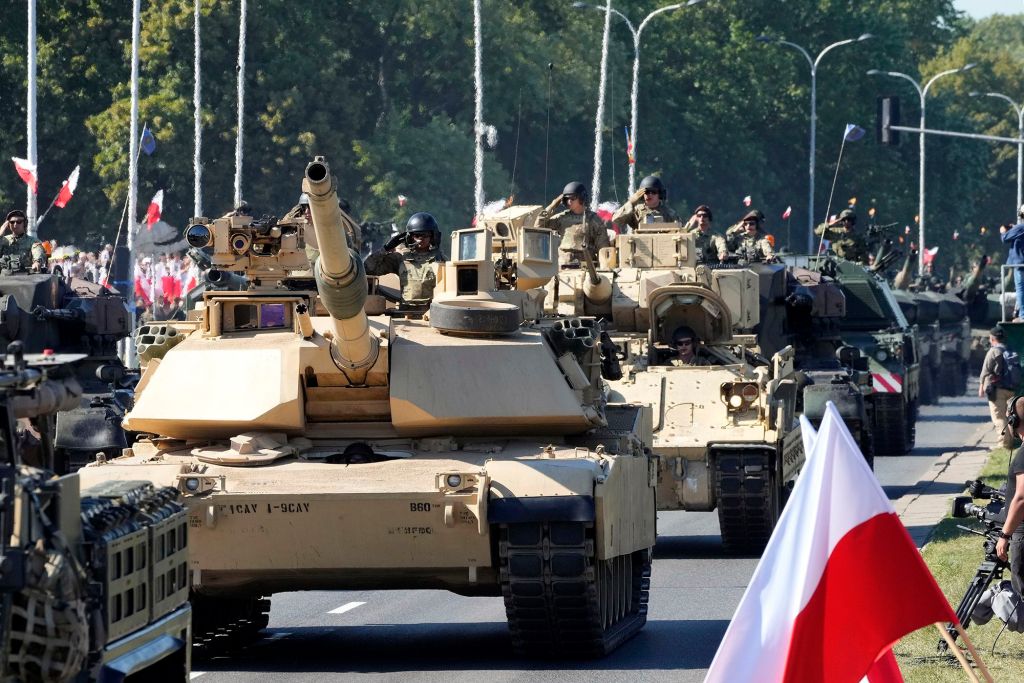
Even Poland, reaching 4% GDP spending in 2023, used emergency mechanisms and off-balance-sheet financing that may prove unsustainable. The Polish model cannot export to countries without fiscal buffers.
Standard prescriptions miss a fundamental point: small countries cannot win a spending race against Russia. Georgia’s entire 2024 defense budget – $500 million equals what Moscow spends in four days. Moldova’s expenditure is less than one Russian fighter jet. Telling these countries to “increase defense to NATO levels” is politically suicidal and strategically meaningless.
The breakthrough comes from accepting the worst case. If conventional defense cannot guarantee sovereignty, then planning must center on making occupation impossible to sustain. This shifts the question from “how do we prevent invasion?” to “how do we ensure invasion becomes the aggressor’s catastrophe?” The budgetary implications are radical: asymmetric resistance infrastructure costs a fraction of conventional forces while delivering superior deterrence.
Three Strategies Grounded in Fiscal Reality
First, prepare for occupation as a budgetary strategy. Ukraine’s post-2014 investment in territorial defense networks, decentralized command, prepositioned supplies and civilian training cost roughly 2% of conventional force modernization. When invasion came in 2022, these networks proved more valuable than any tank battalion.
Georgia could redirect spending from symbolic armored brigades to distributed resistance infrastructure: encrypted communications, decentralized logistics caches, civilian defense training integrated into civil defense structures. The political framing writes itself: “smart defense that doesn’t drain pensions.”
Moldova offers the clearest test case. Rather than building an army capable of stopping Russian forces impossible at 0.4% GDP, the defense plan should focus on making occupation economically ruinous. This requires: secure command continuity protocols, pre-designated stay-behind coordination networks, pre-negotiated external logistics corridors through Romania. Total estimated cost: under $50 million annually less than current ineffective conventional spending. The deterrent value is higher because the Kremlin understands occupation costs.
Second, weaponize the budget constraint through “defense as economic warfare”. Small countries cannot outspend Russia militarily, but they can make occupation economically unsustainable through advance preparation:
Financial booby-trapping: Advance legislation automatically freezing government contracts, invalidating property transfers, triggering international asset seizure upon occupation. Georgia could pass legislation establishing that economic activity under occupation is legally void, with automatic international enforcement. Cost: zero. Strategic value: makes collaboration economically irrational.
Infrastructure sabotage protocols: Pre-designate critical infrastructure with remote deactivation capabilities. A power grid that cannot support occupation logistics, rail networks with pre-placed disruption points. Estonia has implemented versions in its “total defense” model. Budget allocation is minimal, mostly software and planning.
Legal warfare preparation: Establish documentation systems, international legal partnerships, and evidentiary protocols for comprehensive asset seizure against occupying powers. Moldova could establish these frameworks for under $10 million, far less than a single artillery battalion.
Third, exploit the international enforcement asymmetry. Small countries cannot self-deter aggression, but they can make aggression internationally toxic. Instead of spending on weapons that may never be used, spend on guaranteed international integration that makes invasion catastrophic for the aggressor.
Consider Georgia’s potential “Occupation Costs Treaty” with the EU: Brussels commits to automatic, comprehensive sanctions if Russian occupation expands, while Tbilisi commits to governance reforms. Cost to Georgia: modest sovereignty constraints. Benefit: credible deterrence without military spending. Moldova could negotiate similar frameworks with Romania and Poland, creating tripwire commitments that make Transnistrian expansion too costly.
The budget logic is compelling: Georgia spends 2% of GDP trying to build conventional deterrence that does not work. Redirecting 0.5% toward diplomatic integration while shifting 1.5% toward asymmetric preparation would deliver superior security at lower cost.
The urgency is acute. Moldova faces potential Russian escalation with a military that cannot defend Chișinău for 48 hours. Georgia confronts frozen conflicts with an army designed for exercises, not war. Serbia must choose between EU and Russian alignment with defense spending too low to matter.
Eastern European countries do not lack foresight; they lack budgetary models that align political incentives with strategic necessity. Telling governments to “choose guns over butter” in electoral democracies with impoverished populations is politically illiterate. The solution is to make security cheaper and more effective by abandoning the fiction that small countries can win conventional wars.
This requires intellectual honesty that current defense establishments resist. Generals want tanks and jets because that is what “real” militaries have. Politicians want photo opportunities with NATO equipment. Both preferences are lethal luxuries. The countries that survive will be those that accept asymmetric inferiority conventionally and build superior capacity for making occupation unbearable.
The question is not whether the crisis is severe enough to force change – it obviously is. The question is whether political systems can adopt solutions that offend military vanity and challenge defense industry interests before the next Russian move makes the question moot. On current trajectory, the answer is no.
Bibliography
Stockholm International Peace Research Institute, Military Expenditure Database (Stockholm: SIPRI, 2023)
Svante E. Cornell and S. Frederick Starr, eds., The Guns of August 2008: Russia’s War in Georgia (Armonk, NY: M.E. Sharpe, 2009)
International Institute for Strategic Studies, The Military Balance 2015 (London: IISS, 2015)


 The Eastern European Review
Leave a comment