
By Mariam Korakhashvili
Bachelor’s Student in International Relations at Webster University Tbilisi
November 2025 • 9-Minute Read
In the aftermath of the Soviet collapse, Eastern Europeans celebrated their newly found freedom, yet soon found themselves suspended in ideological limbo. The region’s states faced severe economic decline, institutional weakness, and a profound crisis of identity. With socialism discredited and no viable domestic alternative in sight, Western powers stepped in to guide what became known as the period of “transition” — from planned economies to liberal democracy, from state control to market freedom, and from ideology to supposed pragmatism.
Three decades later, however, the legacy of this transition remains questioned. The promise of neoliberal reform has given way to disillusionment and uncertainty, as citizens across the region grapple with widening inequality, corruption, and a persistent sense of political and economic dependency. This paper aims to reminisce about the beginnings of neoliberalism in the region and review its legacy and outcomes in modern-day Eastern Europe.
The Early Days of Transition
The 1990s encapsulated what many Western observers described as Eastern Europe’s ideological awakening, an era in which the collapse of socialism was expected to triumph in a new age of prosperity and freedom. Yet this moment of ideological awakening was also one of profound vulnerability. The newly independent states of the former Soviet bloc were politically inexperienced, economically fragile, and institutionally unprepared for the complexities of democratic capitalism and were unsure of the ways in which Eastern Europe could catch up to the states with the long history of functioning free-market.
During this period, Western policymakers and international financial institutions, most notably the International Monetary Fund (IMF) and the World Bank promoted neoliberalism as a universal model for modernization of the Eastern European economic system. (Havryshylyn et al., 1998)(Tarr, 1991). Market liberalization, privatization, and the near elimination of state intervention were presented not as ideological choices but as objective necessities, the only path toward integration into the global economy.
The intellectual face of this transformation was Jeffrey Sachs, a Harvard economist who, in his 1990 article “What is to be Done?”, referenced Lenin’s own revolutionary language to call for a decisive break with the socialist past in the Eastern bloc. Sachs and other Western advisors argued that “shock therapy”—the quick abolition of state institutions and the instant liberalization of trade was required since gradual reform would only prolong the crisis. A large portion of the post-Soviet world, including Georgia, the Baltic states, Poland, and Russia, adopted this strategy. (Gowan, 1995).
The Deceptive Rhetoric
The Western narrative of transition framed neoliberalism as an inevitable, unquestionable system, which would lead Eastern European people to freedom of progress. This framing was crucial in depoliticizing what was, in fact, a deeply ideological transformation. The economic reforms of the 1990s were often justified through technocratic language, using words such as “efficiency, modernization, fair competition!” while concealing the ideological assumption that the power and governance would end up in the hands of markets, rather than states or communities. (Bockman, 2002).
Such rhetoric achieved the association of itself with coercion, implying the people’s view of neoliberalism was not ideological, but it became the common sense. By the late 1990s to mid-2000s, to question the market was to risk being seen as backward or anti-Western in Eastern Europe. Integration into the global economy and alignment with Western models became synonymous with modernity itself. (There, 2020).
The Neoliberalist Formation of Politics
Neoliberal reform in Eastern Europe eventually transcended its economic sphere, and went on to shape the meaning of democracy. Western advisers and international institutions promoted a vision of governance in which democratic legitimacy depended on adherence to market principles. To be democratic was, unquestionably, to be neoliberal.
This definition of democracy did not remain without consequences. In many post-Soviet states, economic liberalization proceeded faster than democratic consolidation, resulting in hybrid regimes that combined formal electoral politics with deeply unequal economic structures. Political competition often revolved around personalities rather than ideologies, as both left- and right-wing parties internalized the same economic orthodoxy. The collapse of alternative economic visions led to what Mark Fisher famously described as “capitalist realism” — the belief that there is no conceivable alternative to the market. (Fisher, 2009)
In the case of Eastern Europe, this meant that democracy itself was dimmed down. The elections gave citizens the freedom to determine who would govern, but not how governance would be exercised. Through remaining religious to neoliberal policies, Fiscal austerity, privatization, and deregulation became structural imperatives. As a result, democratic politics was reduced to managing the consequences of neoliberalism rather than challenging its premises.
The New Playground for Oligarchy and Corruption
The neoliberal reforms undoubtedly laid the groundwork for pervasive corruption and the emergence of oligarchic systems across the post-Soviet world. The above-mentioned “shock therapy” led to rapid privatization within a system of non-transparency and insider deals. These processes enabled a small group of politically connected individuals to acquire vast state assets at minimal cost. What Western advisers described as the creation of a “competitive market economy” was, in practice, the construction of a new economic elite that combined private capital with political power.
The infamous “loans-for-shares” plan of the mid-1990s in Russia allowed a small group of businessmen to obtain ownership of the nation’s most significant industries, especially in banking, energy, and natural resources, at a fraction of their true value. These individuals—Boris Berezovsky, Mikhail Khodorkovsky, and Roman Abramovich—were eventually classified as oligarchs and came to represent the excesses of post-Soviet capitalism. (Treisman, 2010). They effectively blurred the distinction between corporate interests and state governance by exerting tremendous influence on both politics and the economy.
Across the region, similar trends became evident. The blending of political and economic power that came to define Ukraine’s post-Soviet elite was personified by individuals such as Petro Poroshenko, who went from being a confectionery magnate to the president of Ukraine. Those with early access to political networks were able to turn administrative power into private wealth through the purported “free market.” Neoliberal reforms contributed to the entrenchment of oligarchic structures that still exist today rather than encouraging meritocratic competition. (Konończuk, 2019).
The above-mentioned individuals, though are in many cases lawbreakers, are still the products of a system that allows their existence in the first place. The conclusion that can be made is that, furthermore, neoliberal recommendations that emphasized “lean” government and fiscal discipline frequently undermined the very institutions meant to control corruption. In Western-led reform programs, “anti-corruption” became a catchphrase, but the fundamental mechanisms that allowed elite capture, such as deregulation, lax taxation, and privatized governance, were not addressed. The result was a paradox: corruption became systemic, ingrained in the fundamental workings of the new market order, even as post-socialist administrations ostensibly promoted openness and rule-of-law reforms.
In this sense, oligarchy was not a deviation from neoliberalism but one of its logical outcomes. When markets are liberalized without robust institutions, and when political legitimacy is equated with economic reform, wealth naturally gravitates toward those who already possess the networks and knowledge to exploit the system. The promise of market competition gave way to monopolistic dominance; the promise of democracy was reduced to managed pluralism under the shadow of economic elites.
The Aftermath
The neoliberal transformation of Eastern Europe was not only an economic project but also a profound social and cultural experiment. It aimed to replace the collectivist legacy of socialism with its emphasis on equality, social security, and community with the values of individualism, competition, and market rationality. To many in the West, this shift symbolized liberation from ideological and tyrannical dogma; yet for millions of Eastern Europeans, it also meant the dismantling of social safety nets, the erosion of labor protections, and the privatization of essential public goods such as healthcare, housing, and education.
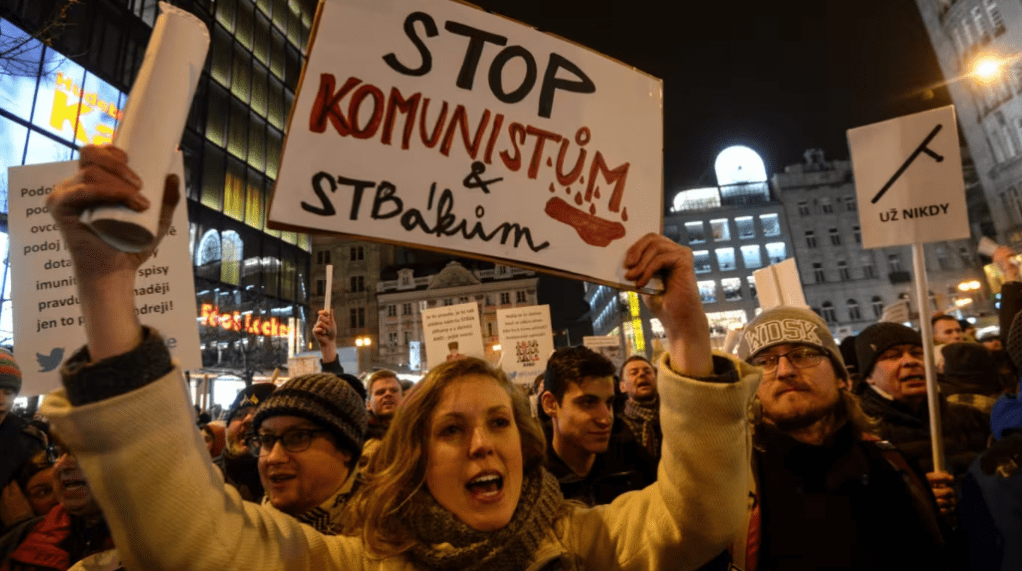
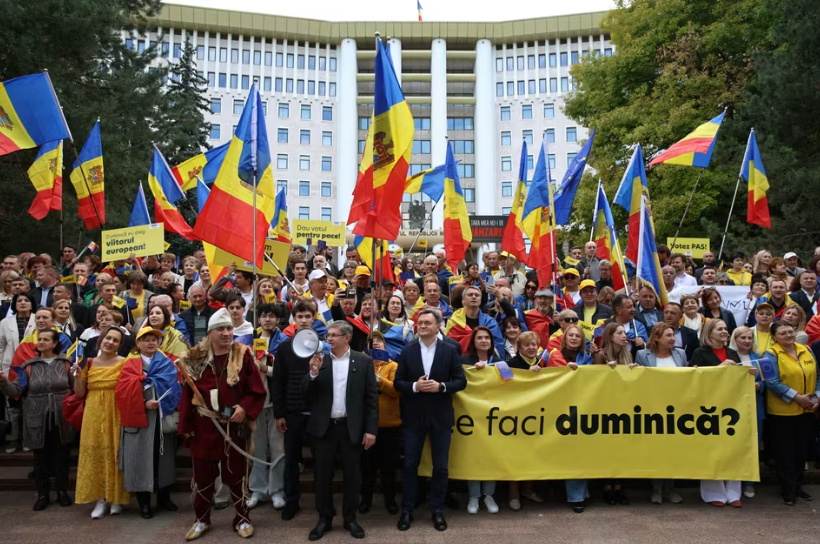
In the modern day, marking three decades from the Soviet liberation, the cultural aftermath of this transformation is most visible among the region’s youth. Young Eastern Europeans, particularly from countries such as Bulgaria, Romania, Moldova, Ukraine, and Georgia, continue to leave their homelands in search of better wages, stable jobs, and stronger, more stable welfare systems abroad. (IOM, 2025). Ironically, many of the countries that attract these migrants, such as Germany, France, and the Nordic states, maintain social models that temper market capitalism with extensive public programs, progressive taxation, and state-supported welfare structures. (EU Comission, 2025). In other words, Eastern European youth are moving toward societies that precisely embody the balance between state and market that neoliberal reform in their own countries had sought to dismantle.
This mass migration reflects not only economic dissatisfaction but also a broader moral exhaustion with the promises of “transition.” For a generation raised in the shadow of neoliberalism, the West is no longer viewed as a purely ideological beacon but as a place where the ideals of social protection and dignity remain tangible. The disillusionment with domestic systems has also sparked a quiet cultural reappraisal of socialism — not as a political model to be revived, but as a reference point for imagining more humane and inclusive alternatives to market fundamentalism.
Ultimately, the social cost of neoliberalism in Eastern Europe is not measured solely in economic terms, but in the erosion of collective confidence. The collapse of socialism left a vacuum that neoliberalism failed to fill with meaning or solidarity. What remains is a region caught between systems—skeptical of its past, uncertain of its future, and still searching for a model that can reconcile freedom with fairness and growth with justice.
Bibliography
Bockman, J. (2002). Eastern Europe as a Laboratory for Economic Knowledge: The Transnational Roots of Neoliberalism. JSTOR. https://ezp.slu.edu/login?url=www.jstor.org%2Fstable%2F10.1086%2F344411
EU Comission. (2025). European Social Fairness. European Commission. https://commission.europa.eu/priorities-2024-2029/european-social-fairness_en
Fisher, M. (2009). Capitalist realism. Google Books. https://books.google.ge/books/about/Capitalist_Realism.html?id=ibN3fGpW1DIC&redir_esc=y
Gowan, P. (1995, October 1). Peter Gowan, Neo-Liberal Theory and practice for Eastern Europe, NLR I/213, September–October 1995. New Left Review. https://newleftreview.org/issues/i213/articles/peter-gowan-neo-liberal-theory-and-practice-for-eastern-europe
Havryshylyn, O., Izvorski, I., & Van Rooden, R. (1998). Recovery and Growth in Transitional Economies 1990-97. International Monetary Fund.
IOM. (2025, February). Migration and demographics. https://eca.iom.int/sites/g/files/tmzbdl2626/files/documents/2025-02/migration-and-demographics-in-the-eca-region_feb-2025-1.pdf Konończuk. (2019, February 11). Oligarchs after the Maidan: The old system in a “new” Ukraine. OSW Centre for Eastern Studies. https://www.osw.waw.pl/en/publikacje/osw-commentary/2015-02-16/oligarchs-after-maidan-old-system-a-new-ukraine
Tarr, D. G. (1991). Problems in the Transition from the CMEA: Implications for Eastern Europe. World Bank Archives. https://documents1.worldbank.org/curated/en/278061468913897180/txt/Problems-in-the-transition-from-the-CMEA-implications-for-Eastern-Europe.txt
There, P. (2020). Populism and the legacy of transition in Eastern Europe. Green European Journal. https://www.greeneuropeanjournal.eu/populism-and-the-legacy-of-transition-in-eastern-europe/
Treisman, D. (2010, February 2). “loans for shares” revisited. NBER Working Papers. https://ideas.repec.org/p/nbr/nberwo/15819.html

 The Eastern European Review
Leave a comment